Clear Land Without Creating Debris Piles
Forestry mulching in Dayton gives you usable property without the mess of hauling or burning.
When you need to clear overgrown brush, saplings, or small trees across your Dayton property, forestry mulching handles it all in one pass. The machine cuts and grinds vegetation into a nutrient-rich layer that settles directly onto the ground, eliminating the need for piles, trailers, or burn permits. You're left with cleared land that looks finished, not torn up, and the mulch layer protects soil from erosion while suppressing regrowth.
Moose Creek Land Clearing uses forestry mulching equipment designed to process brush, woody undergrowth, and trees up to six inches in diameter without disturbing roots or topsoil. This method works well for residential lots that need clearing before construction, commercial sites preparing for development, and larger acreages where traditional clearing would require weeks of hauling. The process is quieter and faster than chainsaw work, and it leaves your property ready for the next phase without waiting for debris removal.
If you're planning to clear land in Dayton and want to avoid the logistical hassle of debris management, contact us to discuss how forestry mulching fits your timeline and property goals.
How the Ground Looks After Mulching
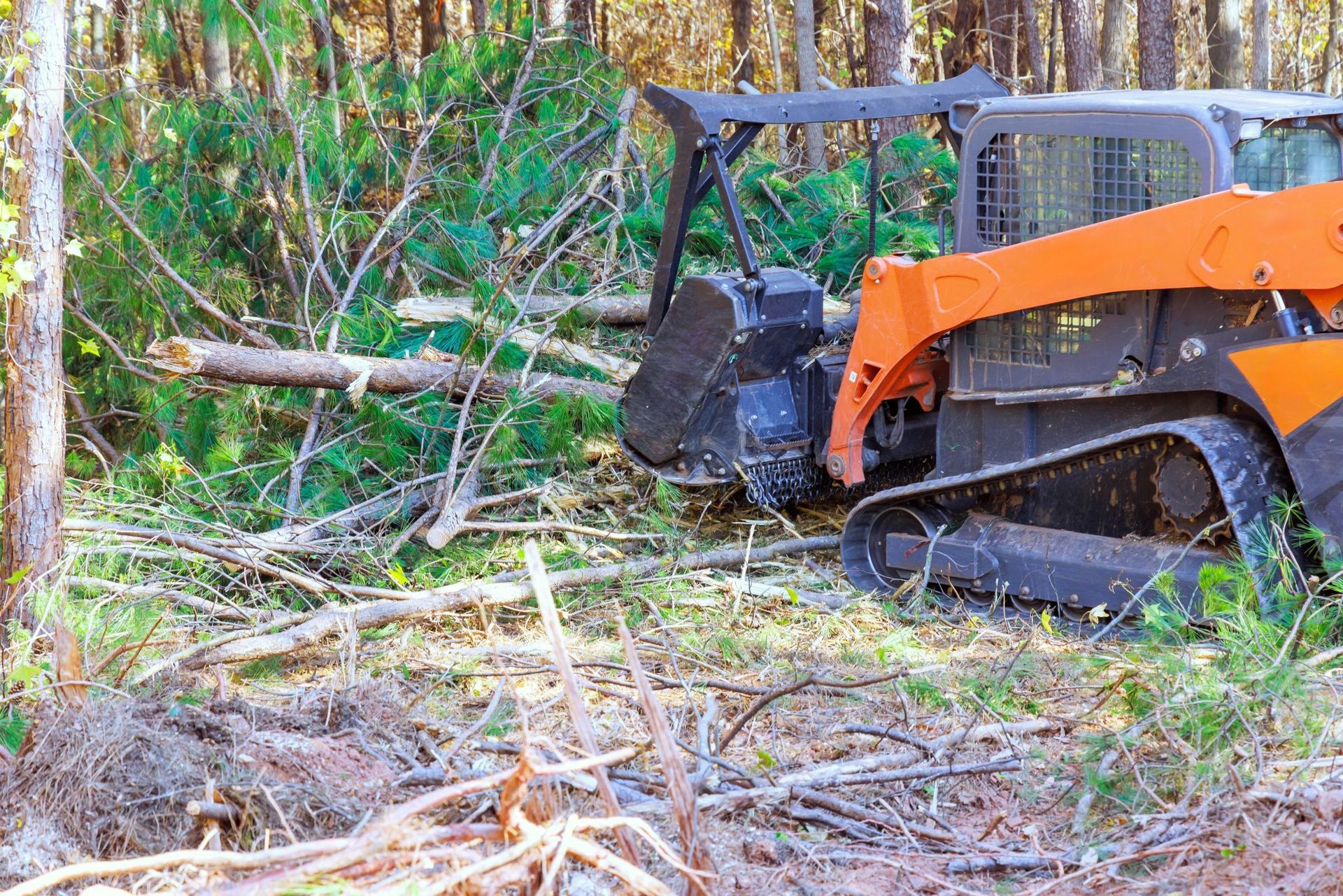
We bring in a tracked mulcher that moves across your Dayton property systematically, cutting vegetation at ground level and shredding it into uniform chips. The machine's cutting drum processes everything from dense brush to small trees in a single operation, leaving behind a consistent layer of mulch that ranges from two to four inches deep depending on the density of what was cleared. You won't see stumps sticking up or gouges in the soil.
After the work is finished, the cleared area has a natural, finished appearance. The mulch layer helps retain moisture, reduces dust, and makes it harder for invasive plants to reestablish quickly. Within a few weeks, the mulch begins to decompose and integrate into the soil, improving its organic content without additional input from you.
Forestry mulching works best on properties where vegetation is less than six inches in diameter and where you want to preserve existing trees or leave root systems intact. It does not remove stumps or grade the land, so if your project requires leveling or stump extraction, those are separate steps that can be coordinated after mulching is complete. The method is especially useful when you need to clear fence lines, access roads, or large sections of overgrown acreage without creating logistical bottlenecks.
Questions People Ask Before They Book
Homeowners and property managers in Dayton often have similar questions before scheduling forestry mulching, especially if they've never used this method before. The answers below address the most common concerns we hear during site visits and initial consultations.
What size trees can forestry mulching handle?
The mulcher processes brush, saplings, and trees up to six inches in diameter. Anything larger requires cutting and removal before mulching begins.
How long does it take to mulch an acre?
On average, clearing one acre takes between four and eight hours depending on vegetation density and terrain. Thicker brush or uneven ground adds time, while open areas with lighter growth move faster.
When is forestry mulching not the right choice?
If you need the land graded, stumps removed, or large trees taken out, mulching alone won't accomplish those tasks. It's a clearing method, not a grading or excavation service.
What happens to the mulch after it's applied?
The mulch layer stays on the ground and begins breaking down naturally over several months. It reduces erosion, suppresses weed growth, and adds organic material back into the soil as it decomposes.
How soon can I use the land after mulching?
You can walk or drive equipment over the cleared area immediately. The mulch provides a stable surface that handles light traffic without turning into mud or ruts.
Moose Creek Land Clearing schedules site visits in Dayton to evaluate your property's vegetation density, terrain, and access points before providing a timeline and cost estimate. If you're ready to clear land without creating a hauling project, reach out to discuss your property and what you're planning to do with it once it's cleared.